

Democracy in Denmark
Denmark got it's constitution in 1849 - but it was far from democracy for everyone. As we are having our Parlement elections, I will write a bit about our democracy, how it startet and the main big changes in it's waytill today.
How it started
At the beginning of the 1800s demands for political reform grew around Europe. Inspired by, for example, Norway’s constitution of 1814 and the July Revolution in Paris of 1830, a national liberal movement emerged in Denmark rooted in the middle classes of Copenhagen. The national liberals made demands for representative government guaranteed by a free constitution. The peasantry organised themselves into the Society of the Friends of Peasants, which supported the liberal demands, for instance, through the weekly publication “the Friend of the Peasantry”.
Frederik VI chose to partially give in to the demands. The laws of 28 May 1831 and 15 May 1834 introduced four Assemblies of the Estates of the Realm for respectively Holstein, Schleswig, Jutland and the Islands. The assemblies consisted of representatives from three of the four estates: the landowning aristocrats, townsmen with property and farmers possessing property over a certain size. Only 3% of the population had the right to vote in the assemblies and even fewer were eligible to stand for election to them. The representatives could debate and propose laws, but the Assemblies of the Estates of the Realm were still only advisory bodies.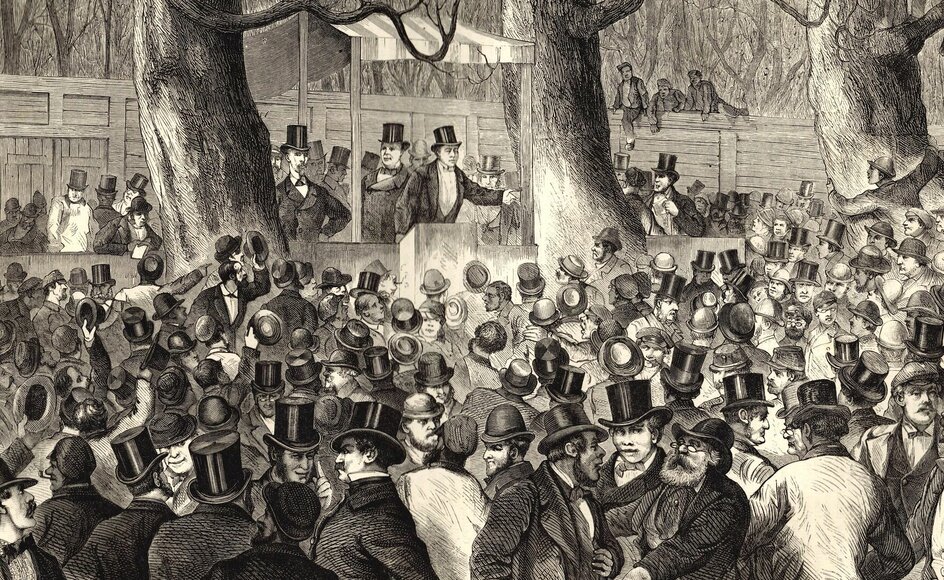
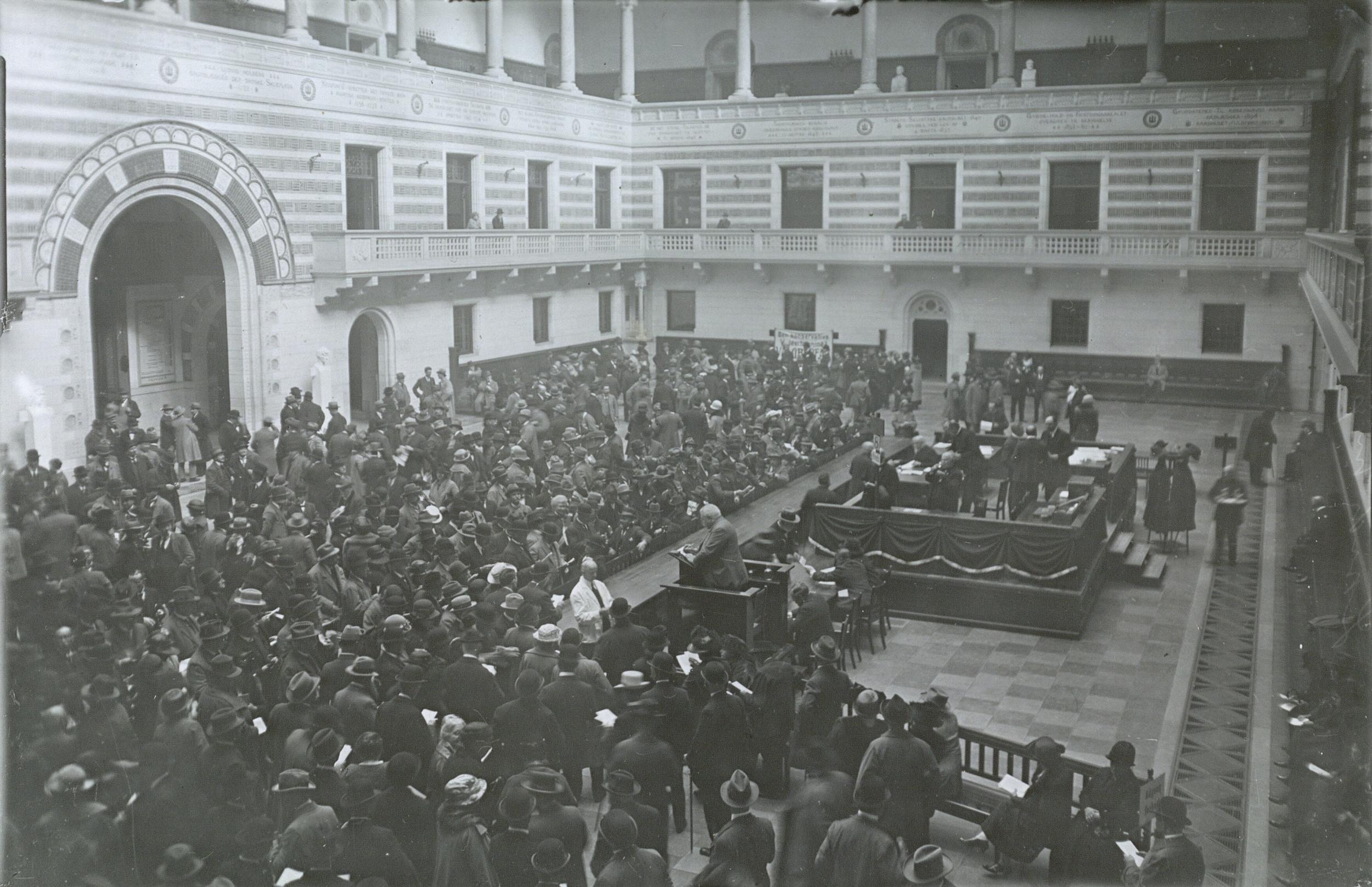
Picture 1875: men voting in Rosenborg in Copenhagen 1875
"Democracy? For many years, only men over 30 and with their own homes were allowed to vote in parliamentary and regional elections in Denmark. And when they voted, it was by raising an arm in the air. Here are the men voting at the Excercerpladsen at Rosenborg in Copenhagen in 1875."
Democracy today
Today we celebrate democracy, when almost all adult Danes can vote in the parliamentary elections and influence the future of Denmark.
This is how Danish democracy has functioned since the Constitution was adopted in 1849 ... and yet not at all.
Because Danish democracy, as we know it today, may not be as old as we often think. This is what Mikkel Thorup, professor of intellectual history at Aarhus University, says in the DR podcast 'Kampen om historien'.
Here are some of the things that have been completely changed since the first general election was held in December 1849:
1- The upper class had its own rules
When the Constitution was introduced, those with the most money also had the most to say. At that time, there was not only a Folketing, but also a Landsting.
Only the richest Danes and landowners could sit in the Landsting. And a new law could only be passed if it was approved by both the Folketing and the Landsting. The politicians of the upper class feared what the majority of Danes might come up with if they were allowed to decide
In 1866, the elite, the largest taxpayers and the landowners were guaranteed even more representatives in the Landsting. For many years after that, the king also appointed governments with political orientations that were in the minority in the Folketing.
Only in 1901 did Christian IX acknowledge that it was not possible for a government to have a majority of elected politicians against it. But right up until the 1930s, the Social Democrats and the Radical Left still had to have a right-wing party from the County Council on their side in order to pass a law - even though the two parties together had a majority in the Folketing.
The County Council was not finally abolished until 1953.
2- Gender, capital and crime
It was not until 1915 that women were granted the right to vote in Denmark. But this actually also applied to a large part of the men.
With the Constitution of 1849, only men with their own residence had the right to vote. This excluded almost all civil servants from voting. In addition, it was also a requirement that one did not owe money for poor relief and had not committed serious crimes.
According to Mikkel Thorup, the founders of the constitution did not believe that democracy was for everyone. And they feared a "tyranny of the majority"
- It was basically believed that these men, who paid taxes and had citizenship, were more suitable to make political decisions than anyone else, explains Mikkel Thorup in 'The Battle for History'.
As I said, things got better in 1915, when women and servants were given the right to vote. But it was not until 1933 that the poor were allowed to vote, even if they had not paid back their poor relief.
Convicted Danes also did not get the right to vote until 1959. But after that there was still another requirement for the right to vote, which was quite different from today.
3- Age
If you were 18 years old in 1849 and showed up at a polling station, you would be rejected. Regardless of whether you were a 19th century Lego or Bestseller heir.
When the constitution was introduced, you could only vote for the Folketing and the Landsting when you were 30 years old.
- It is the question of the extent of the right to vote. It is a very, very big discussion
But as if that were not high enough, in 1915 the age limit was raised all the way up to 35 years if you wanted to vote for the County Council. On the other hand, you could vote for the Folketing when you turned 25.
It was not until 1953 that the voting age for the Folketing elections was lowered again. At that time to 23 years. After that, it slowly slid downwards, but it was not until 1978 that you could tick the box and actively participate in democracy from the day you turned 18.
4- Voting by raising your hand
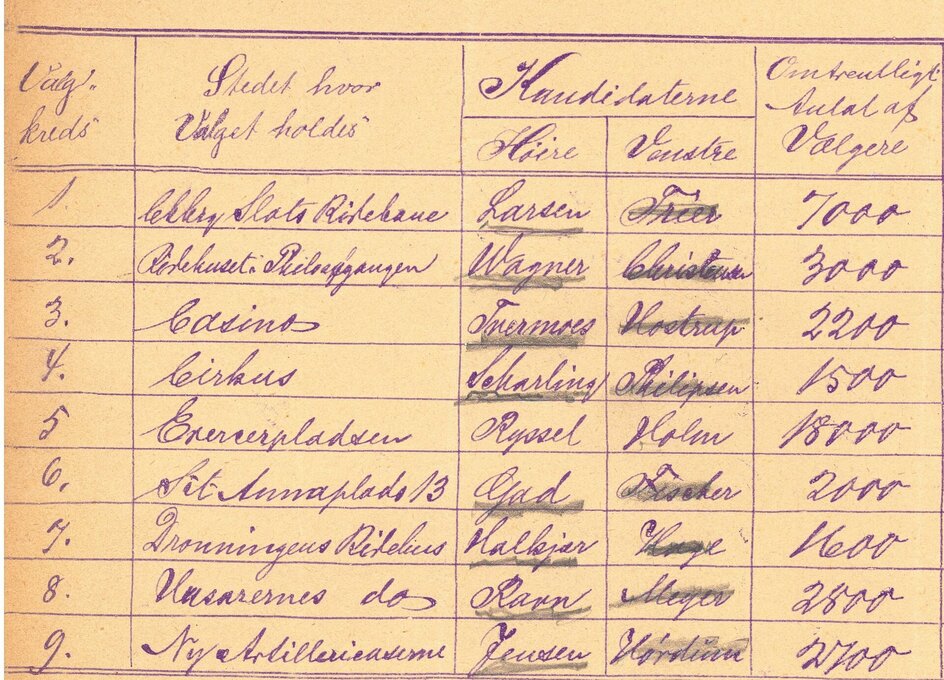
For the first many years, there were neither blue curtains nor long ballot papers for the elections. In fact, the votes were not secret at all until 1901.
To vote, you had to show up and hear the candidates' speeches. After that, there was a vote by show of hands. That's what you can see in the picture above, taken in Skælskør in 1866.
If there was any doubt about which candidate had the most hands in the air, a new vote could be held with a 'vote by name'. This meant that voters lined up and told an election official who they were voting for.
The election to the Folketing was also held in single-member districts. This meant that the candidate who received the most votes had won the district - and votes for the other candidate were wasted. It was not until 1915 that proportional representation began to be adopted, which is the system that parliamentary elections are held with today.
As more and more people gained the right to vote, the parties began to discover how they could also control the masses.
